




What do you picture of when you think of the 1950s?
For most of us what springs to mind when we think of that period is fab fashions and rock’n’roll.
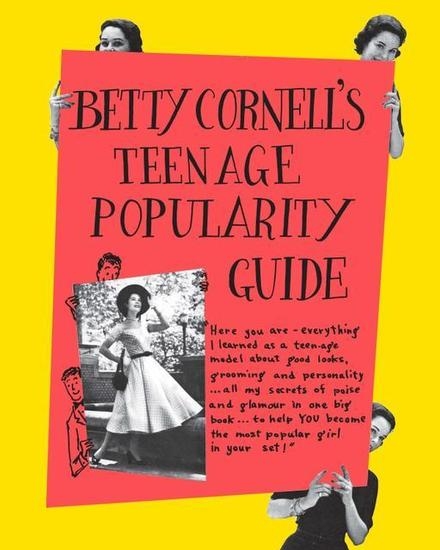
But the ’50s wasn’t all about dreamboats and petticoats. It was also about wide-spread discrimination and xenophobic politics. So could you live in the 1950s? As much as I love 1950s fashions, I know I couldn’t, but then I was never branded as a social outcast like American teenager Maya Van Wagenen. The then 13-year-old, who went to a large state school in Brownsville, Texas, conducted a social experiment to see if she could raise her social standing within the school by adhering to advice given in a 1951 self-help book written by Betty Cornell entitled Teenage Popularity Guide. She also kept a journal every night noting down her progress.
In the book, Cornell, a former teenage model, who recently turned 86, promises to “help you become the most popular girl in your set”, covering subjects such as figure problems, posture, wardrobe staples, skincare as well as how to become a good hostess, attitude and personality. Her book is full of pearls of wisdom such as: “If you want to be a human being, and a popular human being, then you have to stop being an oyster and come out of your shell… Start small and work up”, along with, “In order to be a success in the world, you have to be pretty as well as look pretty. How do you get to be pretty? By having a pleasant personality. You must be affable, considerate, generous, open-hearted and polite.”
Sound advice, which Van Wagenen took to heart and so successfully that, by the end of her experiment, she was told by schoolmates that ‘she shouldn’t worry about it as she was already super-popular’.
Now 15, Van Wagenen has a literary agent, her nightly writings have been turned into a book, entitled Popular by global publisher Penguine. The film rights have been snapped up by Dreamworks making her the youngest non-actor to make a feature deal with the company. Cornell’s Teenage Popularity Guide has also been reprinted in the US and the UK.
Two years down the line, with a two-year book deal and movie under her belt, Maya Van Wagenen has found her place in life, with the help of a book from a bygone era – an era that isn’t known as a shining example for social progress and inclusion. She has taken what was good about the 1950s and left out the bad. And who knows, maybe we could all learn more about getting on in life with a little bit of ’50s flair.