




“Humans are now immortal” were the words of Dr. Wernher von Braun after the Apollo 11 landing craft splashed down in the Pacific Ocean exactly 45 years ago.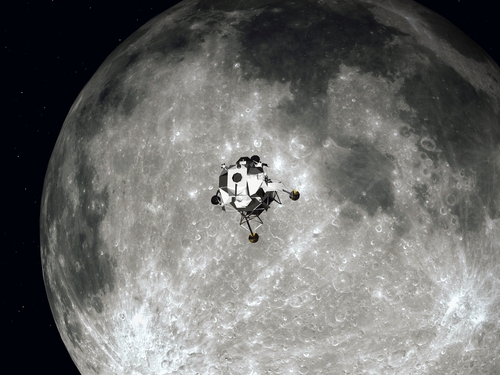
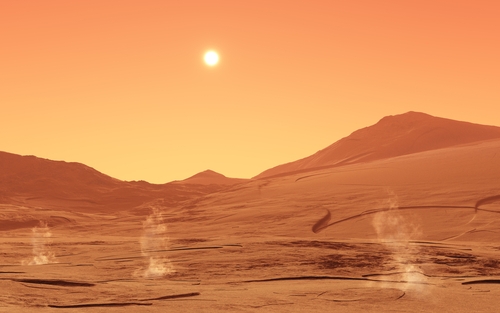
He believed that the moon was a commuter flight and humans would go to Mars and beyond in no time at all. Nearly half a century later the ‘giant leap for mankind’ hasn’t led to another bound on to the red planet, but what has it meant for us?
As well as believing that “Mars is there, waiting to be reached” Buzz Aldrin, the second man on the moon, said that “There’s a historical milestone in the fact that our Apollo 11 landing on the moon took place a mere 66 years after the Wright Brothers’ first flight.”
Like Mr Aldrin and Dr Braun, many people believed at the time that placing a man on the moon was nothing final. Instead they saw it as the latest step in a technological journey being taken at ever increasing speed. With the benefit of hindsight it’s hard not to agree that the predictions of many at the time were not just a little off but wildly misguided. Many members of the space-age elite predicted moon bases and rapid colonisation of Mars. Of course none of that emerged, it seems that humanity has achieved less in space than it optimistically predicted in the summer of ’69.
Or has it? We’ve put a lab on mars, listened to the echoes of the big bang and seen the light of the furthest stars across incomprehensible ages and distances thanks to our unmanned telescopes and probes.
It seems that, thanks to computers and remote control we’ve conquered vast swathes of space, we just haven’t been there yet.